
Docks & Piers
A dock built for how you use the water.
Fixed, floating, or hybrid: permitted and built to code for waterfront properties from South Tampa and Davis Islands to St. Petersburg, Clearwater, and Bradenton, with the electrical, lighting, and water utilities to make it usable, not just buildable.
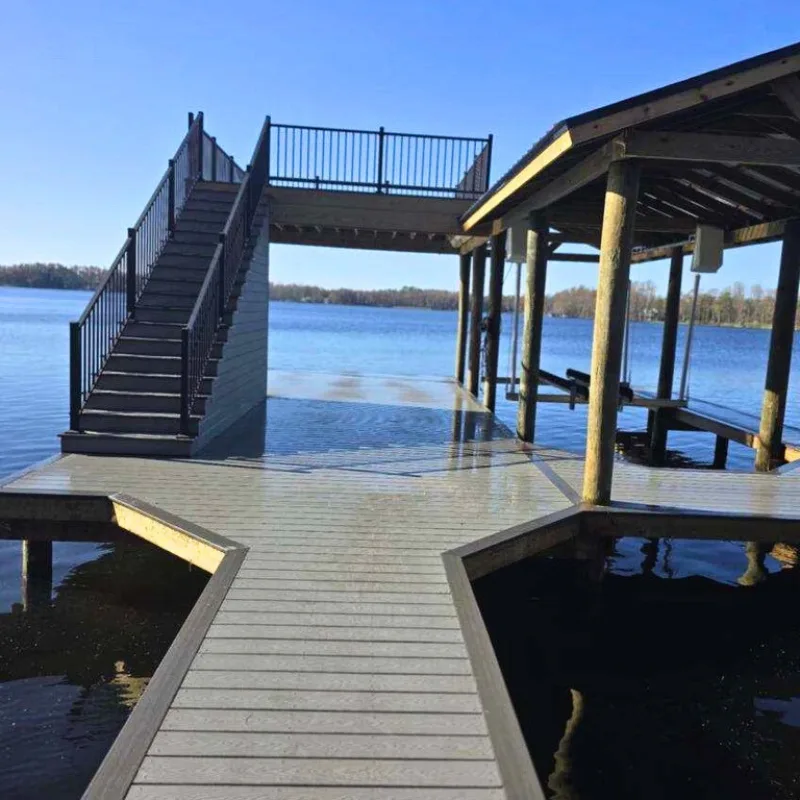
Dock Systems
Fixed, floating, or hybrid — matched to your site.
Fixed Docks
Piling-supported and stable: the standard choice for consistent water depth and heavier use.
Floating Docks
Rise and fall with tide and water level changes, ideal for areas with fluctuating water levels.
Hybrid Systems
Combines fixed and floating sections when site conditions call for both.
Fixed vs. Floating
Which system actually fits your water?
Tide range at your site
Open bay frontage in South Tampa or along Old Tampa Bay sees a bigger tidal swing than protected canals in Apollo Beach or the Pinellas canal communities — that swing is often the deciding factor between fixed and floating.
Boat size & freeboard
A fixed dock at a set height works fine for smaller boats with generous freeboard; larger vessels or low-freeboard boats often do better with a floating system that rises and falls with them.
Water depth consistency
Shallower nearshore areas — common toward Pasco County's Gulf coast — can leave a fixed dock high and dry at low tide. Floating and hybrid systems track the water instead of fighting it.
How you actually use it
Daily fishing off the dock, entertaining, or just a place to tie up — the way you use the water changes what "usable" means, which is why we walk the site before recommending a system.
Built to Actually Use
Wood, composite, or concrete — plus the utilities that make it usable.
-
Electrical & lighting
Installed by licensed electricians for safe nighttime use.
-
Water lines
For washdown, live wells, and dockside convenience.
-
Fish cleaning stations
Built in where the layout allows.
We recommend an annual maintenance program to catch issues early and extend the life of your dock.
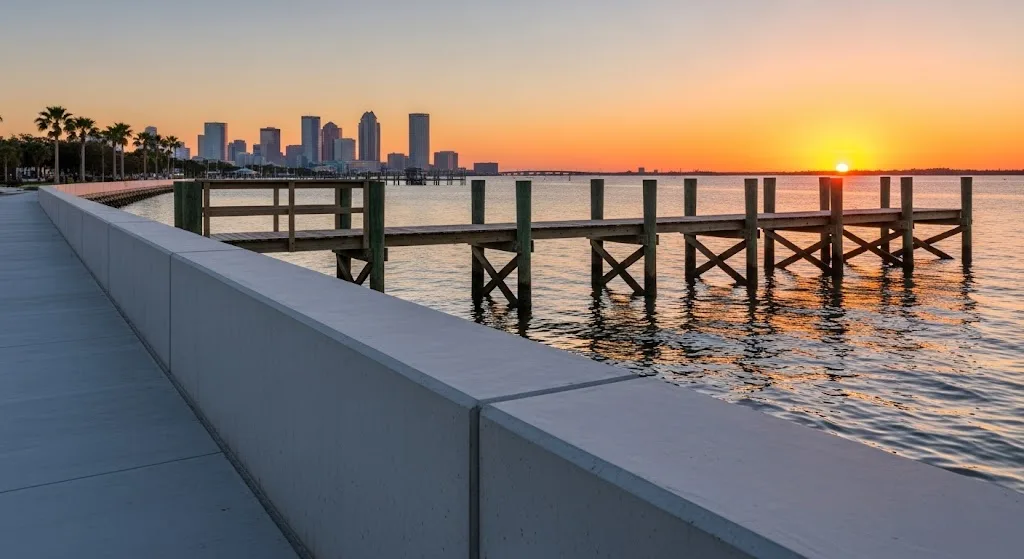
Decking Options
Wood, composite, or concrete decking.
Wood
Classic look and lower upfront cost. Needs periodic sealing and inspection in Tampa Bay's saltwater and sun exposure.
Composite
Resists rot, splintering, and UV fading better than wood, with minimal upkeep, at a higher material cost.
Concrete
Maximum durability for commercial or heavy-use docks, at the highest upfront investment.
Permitting
What dock permitting actually involves.
A dock extends over public waterway, so it's reviewed at more than one level. We manage all of it — this is what's happening behind the scenes.
City or county permit
Local building and zoning review, including dock size and setback rules specific to your waterway.
FDEP & environmental review
The Florida Department of Environmental Protection reviews structures over state waters, including seagrass and manatee protection considerations.
Army Corps of Engineers
Federal review applies to docks extending into navigable waterways, coordinated as part of the same process.
Adding a boat lift to your new dock?
We size and install lifts alongside dock construction: one crew, one project.
Where We Build
Dock construction across every Tampa Bay waterfront.
Tampa, South Tampa, Davis Islands, Harbour Island, Apollo Beach
St. Petersburg, Snell Isle, Clearwater, Largo, Tierra Verde
Bradenton, Anna Maria Island, Longboat Key
New Port Richey and the surrounding coastline
Dock & Pier FAQ
What to know before you build.
Do you handle dock permits?
Yes. We handle all dock permitting and code compliance as part of every project.
Fixed or floating: which do I need?
It depends on your water depth consistency and how you use the dock. We'll recommend the right system during your free site evaluation.
Can you add electrical and lighting?
Yes. Electrical outlets, lighting, water lines, and fish cleaning stations can all be added, installed by licensed electricians.
Get your free dock consultation.
No obligation. We'll walk your site and recommend the right dock system.