Materials · September 1, 2026
Vinyl vs. Steel vs. Concrete Seawalls: Which Is Right for You?
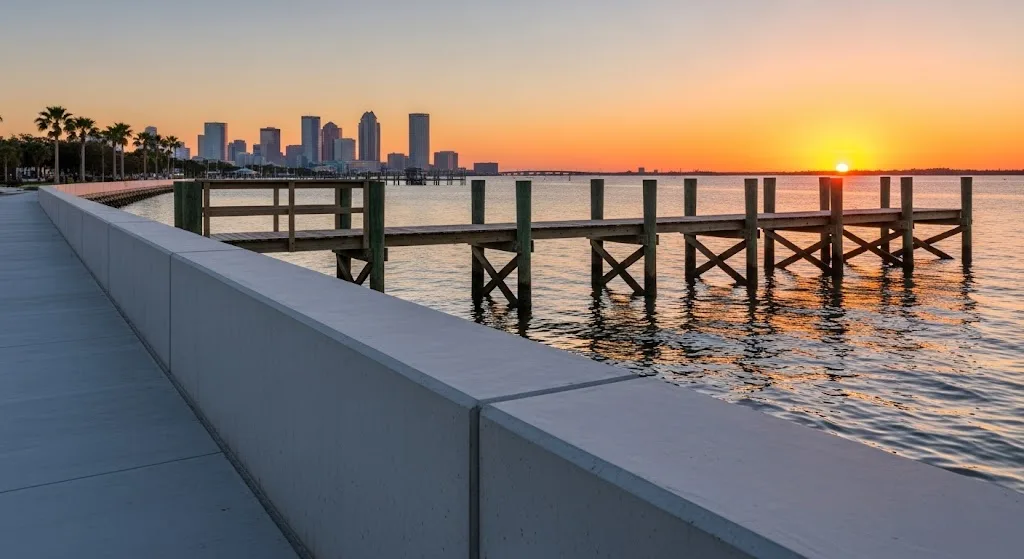
If you're building a new seawall, the material question comes up fast — and every contractor has an opinion. Here's an honest breakdown of the three main systems we build in Tampa Bay, without steering you toward whichever one happens to be easiest for us to install.
Vinyl sheet piling
Vinyl is corrosion-resistant by nature — it doesn't rust the way steel reinforcement does, which matters in Tampa Bay's saltwater environment. It's also generally the most cost-effective of the three systems. For most residential properties without extreme wave exposure, vinyl is a strong, practical choice.
Best for: Most residential canal and bay-front lots without heavy wave or wake exposure.
Steel sheet piling
Steel offers higher structural strength than vinyl, which makes it a common choice for commercial properties, larger residential seawalls, or sites with demanding soil conditions. The trade-off is that steel requires corrosion-resistant coatings and hardware to hold up long-term in saltwater — done right, it lasts; done cheap, it won't.
Best for: Commercial properties, larger walls, or sites with higher wave energy — like Gulf-front lots in Pinellas County.
Reinforced concrete
Concrete — poured or panel systems — offers maximum durability and the traditional seawall look many Tampa Bay waterfront homeowners want. It's typically the highest upfront investment of the three, but properly built and reinforced, it's built to last for decades.
Best for: Homeowners prioritizing a traditional finish and maximum long-term durability, willing to invest more upfront.
Why the "right" material depends on your site, not a general rule
None of these systems is universally "best" — the right choice depends on your soil conditions, wave and wake exposure, budget, and how long you plan to own the property. A vinyl seawall on a protected canal lot can outlast a poorly-installed steel wall on an exposed site. Materials matter, but installation quality — proper embedment depth, tieback anchoring, and a correctly engineered cap — matters just as much.
We evaluate your specific site before recommending a system, rather than defaulting to whichever material is easiest for us to install.
Related reading