Seawalls · August 31, 2026
7 Signs Your Seawall Needs Repair Before Hurricane Season
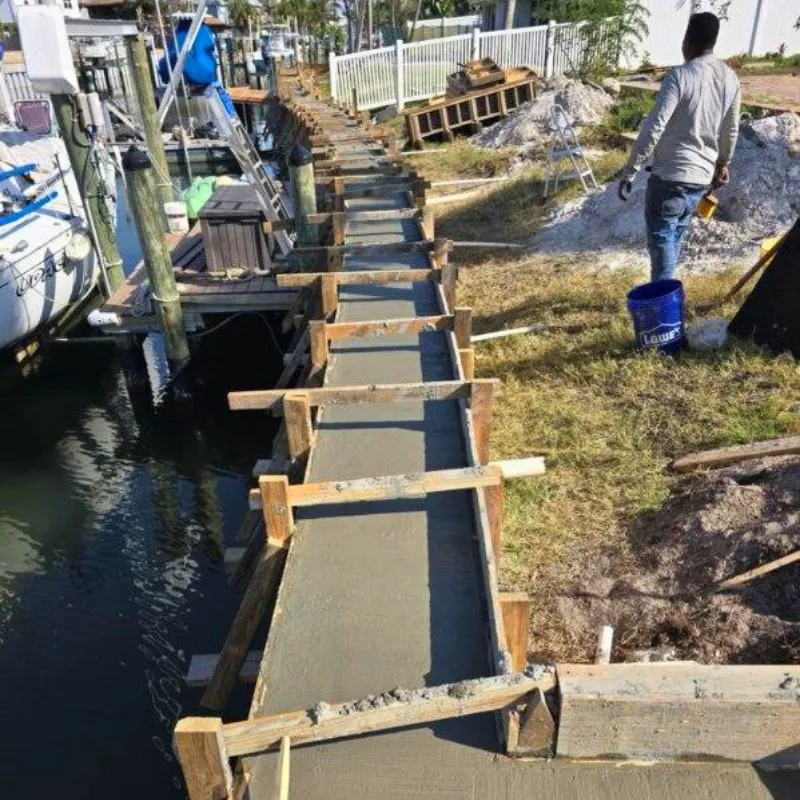
A seawall rarely fails all at once — it gives warning signs first, often for months or years before a storm turns a manageable repair into an emergency. Here's what to actually look for, from a Tampa Bay marine contractor who inspects these walls for a living.
1. Visible cracking
Horizontal or vertical cracks in concrete panels signal structural stress. A hairline crack isn't an emergency, but it's worth documenting and watching — cracks widen over time as water works its way in and out with the tide.
2. Leaning or bulging
A wall that's visibly tilting waterward is losing the battle against soil pressure behind it. This is one of the more serious signs, since it usually means the tieback and anchor system is already compromised.
3. Spalling concrete
Flaking or crumbling surface concrete, often exposing rebar underneath, is a sign that saltwater has corroded the steel reinforcement inside the wall. As rusting rebar expands, it cracks the surrounding concrete from the inside — spalling is often the visible result of damage that's been happening out of sight for a while.
4. Soil loss or sinkholes behind the wall
Low spots, small sinkholes, or soft ground in the yard near the seawall usually mean soil is washing through a gap in the panel or cap. This is easy to miss because it shows up in the yard, not on the wall itself.
5. Failed drainage or weep holes
Weep holes are supposed to relieve water pressure behind the wall. When they're clogged or missing, that pressure has nowhere to go — which accelerates cracking and panel failure.
6. A gap widening at the cap
A visible gap or separation where the cap meets the panel, especially one that seems to be growing, often points to settlement — sometimes ordinary erosion, sometimes something more specific to the ground beneath it (see our note on Pasco County's limestone geology if that's your area).
7. Any wall that's already taken a direct storm hit
If your seawall took surge or high wind waves in a recent storm — even if it looks intact from the yard — it's worth a professional inspection. Storm damage is often structural and sudden, not gradual, and it doesn't always show on the surface right away.
What to do if you spot any of these
None of these signs mean you need a full replacement — many are addressed with a targeted repair if caught early. The real risk is waiting: a $2,000 crack repair today can become a $20,000 structural rebuild if it's left through a few more storm seasons. A free evaluation tells you exactly where you stand before you have to make that call under pressure.